
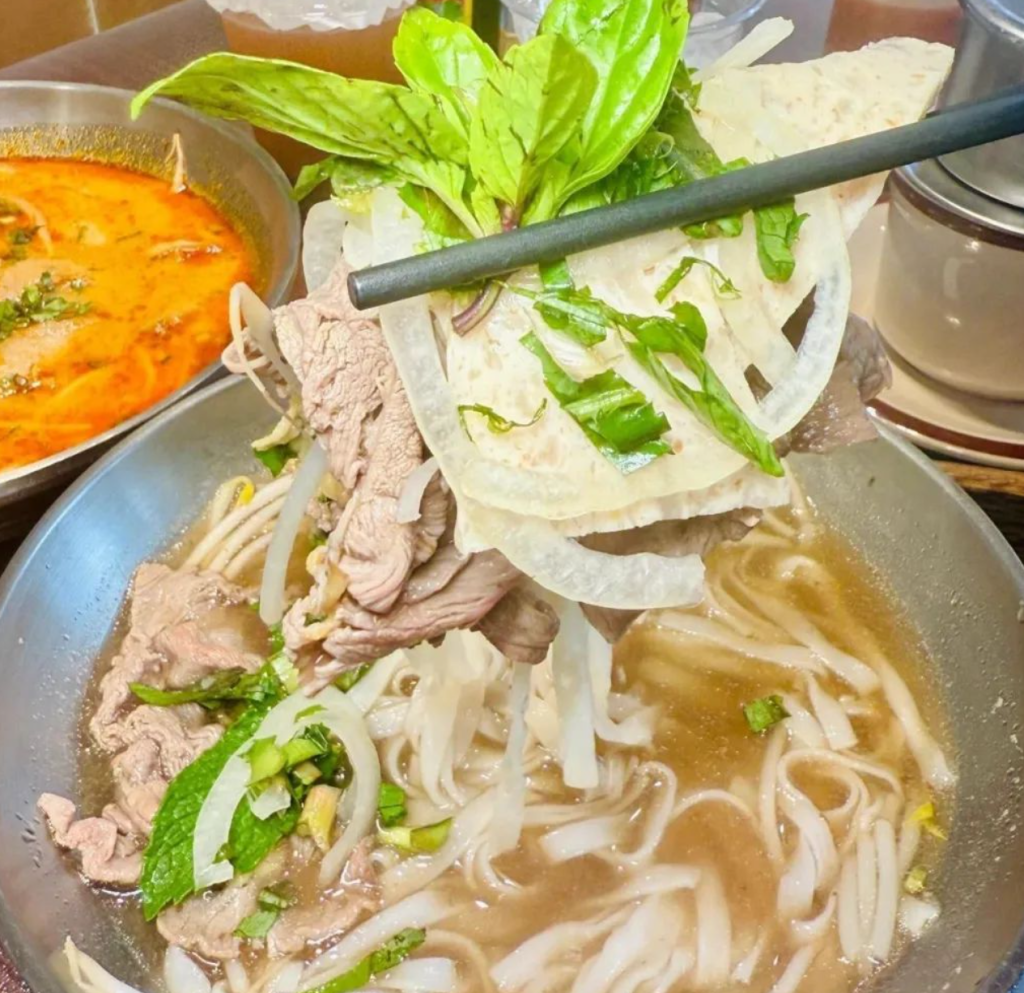
Pho (pronounced “fuh”) is Vietnam’s most famous dish—a fragrant, soul-warming beef noodle soup that has won hearts worldwide. But with so many variations, how do you navigate a pho menu like a pro? After years of slurping pho from Hanoi street stalls to Saigon’s hidden gems, I’ve created this guide to help you order, customize, and enjoy pho like a local.
This article covers:
✔ Pho menu breakdown (best noodle & meat choices)
✔ Must-try pho variations (regional differences)
✔ Pro tips for seasoning & eating pho
✔ Best drinks to pair with pho
1. Pho Menu Guide: Understanding Your Options
A typical pho Vietnam menu has three main components:
A. Noodle Types
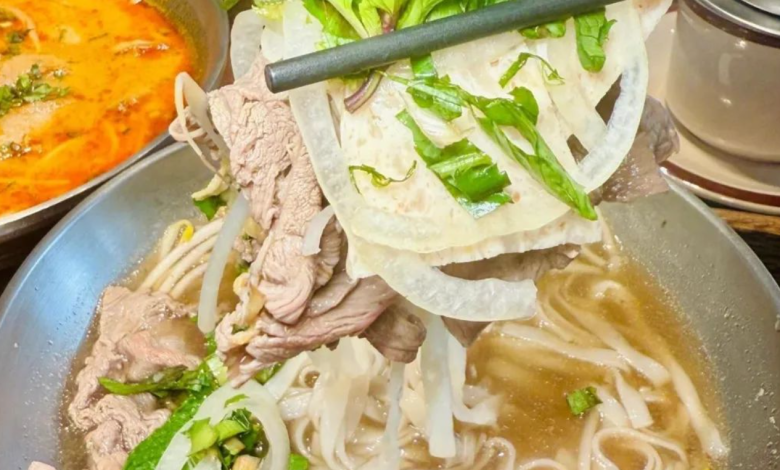
- Pho Tai (Rare Beef Pho)
- Features thinly sliced raw beef that cooks in the hot broth.
- Best for: Those who love tender, melt-in-your-mouth meat.
- Pho Chin (Well-Done Beef Pho)
- Uses brisket or flank steak simmered until soft.
- Best for: Rich, beefy flavor with more chew.
- Pho Dac Biet (Special Combination Pho)
- Includes rare beef, brisket, tendon, tripe, and meatballs.
- Best for: Adventurous eaters who want texture variety.
- Pho Ga (Chicken Pho)
- Made with chicken broth and poached chicken.
- Best for: A lighter, cleaner-tasting pho.
Personal Favorite: Pho Tai Lan (rare beef + brisket)—the perfect balance!
B. Broth Styles
- Hanoi-Style (Pho Bac): Clear, subtle spice, focus on beef bone flavor.
- Saigon-Style (Pho Nam): Sweeter, star anise/cinnamon-forward, often served with more herbs.
Pro Tip: Ask for “nuoc beo” (bone marrow) in Hanoi for extra richness!
C. Noodle Thickness
- Thin noodles (Pho Tuoi): Fresh, chewier texture.
- Thick noodles (Pho Khô): Dried, slightly firmer.
2. Must-Try Pho Variations
Regional Specialties
- Pho Cuon (Hanoi)
- Rolled pho noodles stuffed with beef & herbs (like a fresh spring roll).
- Best with: Peanut dipping sauce.
- Pho Xao (Saigon)
- Stir-fried pho noodles with beef & veggies—crispy yet tender.
- Pho Chua (Northern Vietnam)
- Sour pho with tamarind broth (a rare find!).
Modern Twists
- Pho Burger (Yes, it exists!)
- Pho Pizza (For the truly adventurous)
Where to Try: Pho Thin (Hanoi) for legendary stir-fried pho.
3. How to Customize Your Pho Like a Pro
Essential Add-Ins
✔ Fresh Herbs: Thai basil, cilantro, sawtooth herb.
✔ Bean Sprouts: For crunch.
✔ Lime Wedges: Brightens the broth.
✔ Chili & Garlic Vinegar: For heat lovers.
Condiment Guide
- Hoisin Sauce: Adds sweetness (use sparingly!).
- Sriracha: For spicy depth.
- Fish Sauce (Nuoc Mam): Enhances umami.
Personal Ritual: First sip the plain broth, then customize gradually.
4. What to Drink With Pho
Traditional Pairings
- Vietnamese Iced Coffee (Ca Phe Sua Da): Cuts through richness.
- Sug of Iced Tea (Tra Da): Refreshing & free in most shops.
Local Favorites
- Sugarcane Juice (Nuoc Mia): Balances salty broth.
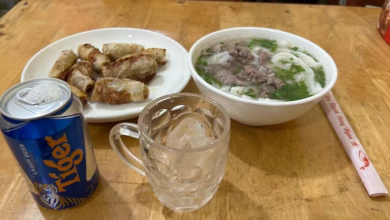
- Beer (Saigon Red): Surprisingly great with pho!
5. Pho Etiquette: Do’s & Don’ts
✅ DO:
- Use chopsticks + spoon (noodles with chopsticks, broth with spoon).
- Slurp loudly (it’s polite in Vietnam!).
❌ DON’T:
- Dump all sauces in at once (taste first!).
- Ask for fork/knife (embrace the chopsticks!).
Final Thoughts: Finding Your Perfect Bowl
Pho is deeply personal—some love clean Hanoi-style, while others crave herb-packed Saigon pho. My advice? Try both styles, experiment with toppings, and savor every slurp!
What’s your favorite pho combo? Share in the comments! 🍜🔥